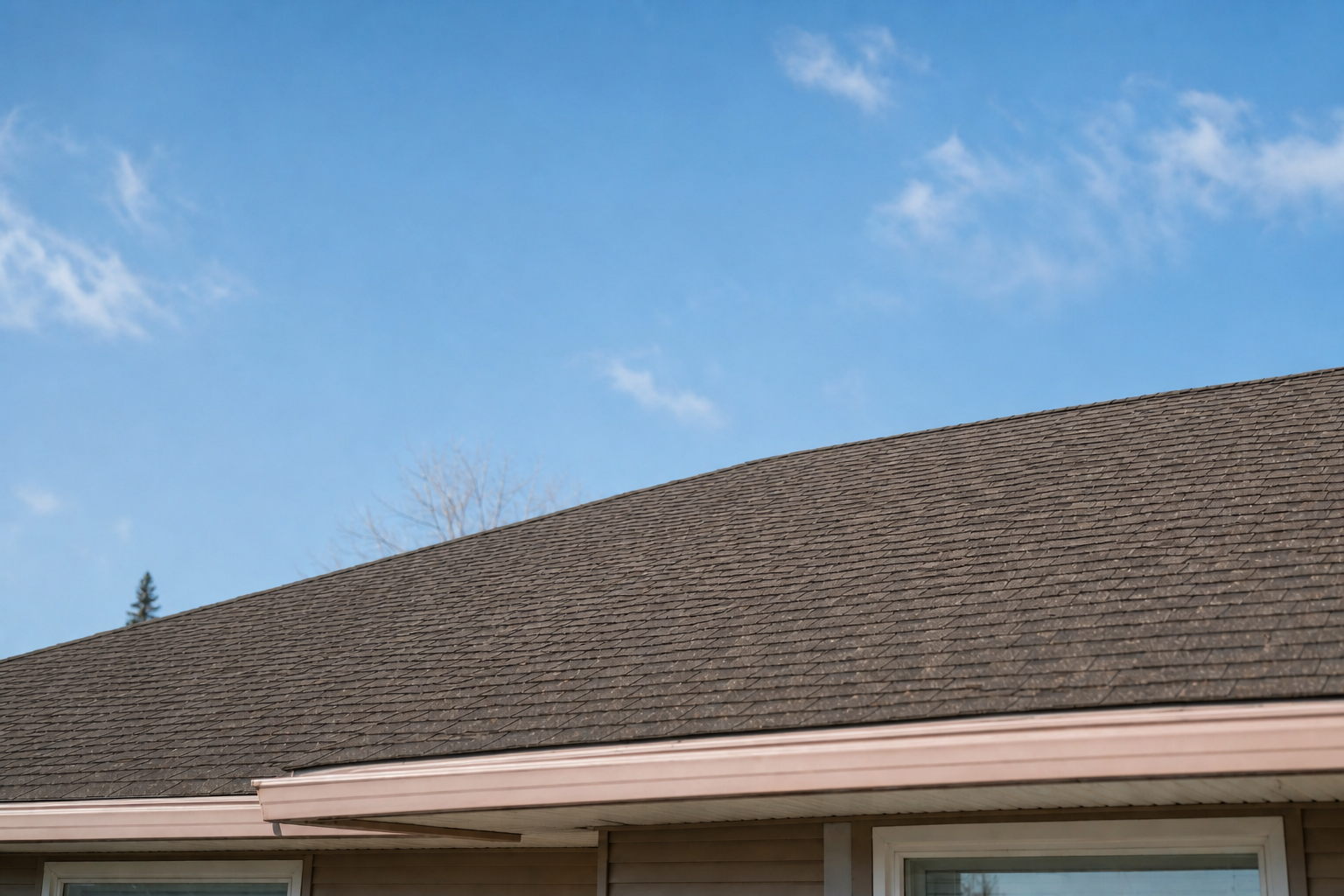
When an overlay is acceptable
One existing layer only. Shingles lying flat, not curled or clawing. A deck that is solid everywhere, checked from the attic and by walking the roof. No history of leaks that suggest wet decking. A roof pitch and structure that can carry the added weight. California code allows a second layer on most houses but never a third.
If any of those fails, the answer is a tear-off, and no amount of wanting to save money changes it.
Why people choose it
It is faster and cheaper because there is no tear-off labor and no dumpster. The old shingles act as guides for laying the new course lines. The house is never open to the weather during the job. For a house being sold in a few years with a sound deck, it is a reasonable choice.
The trade-off is that the new roof runs hotter, and the next re-roof will be a double tear-off.
Doing it properly
Cut back or flatten any curled tabs so the new layer lies flat. Install new drip edge over the old at the eaves and rakes. Replace every flashing: chimney, pipe boots, wall step flashing, valley metal. Reusing old flashing under new shingles is the most common overlay mistake and the reason overlays get a bad name.
Use longer nails so they still reach the deck through both layers.
Special drip edge and starter
Reroofing drip edge is made with a deeper profile to cover the thickness of the old layer at the eave. A proper starter course goes on over it, then the field shingles with the first course aligned to the old layer's second course so the offsets stay correct. Ridge caps are replaced, never overlaid.
Done this way the roof edge looks right and sheds water cleanly.
Where I stand on it
I do overlays when the conditions are genuinely met, and I say no when they are not. The most common reason for a no in this valley is a deck that has been quietly wet under an old leak, which you only find by looking from the attic. That look is part of every replacement estimate I give.
Ask any contractor proposing an overlay whether they went into the attic first.