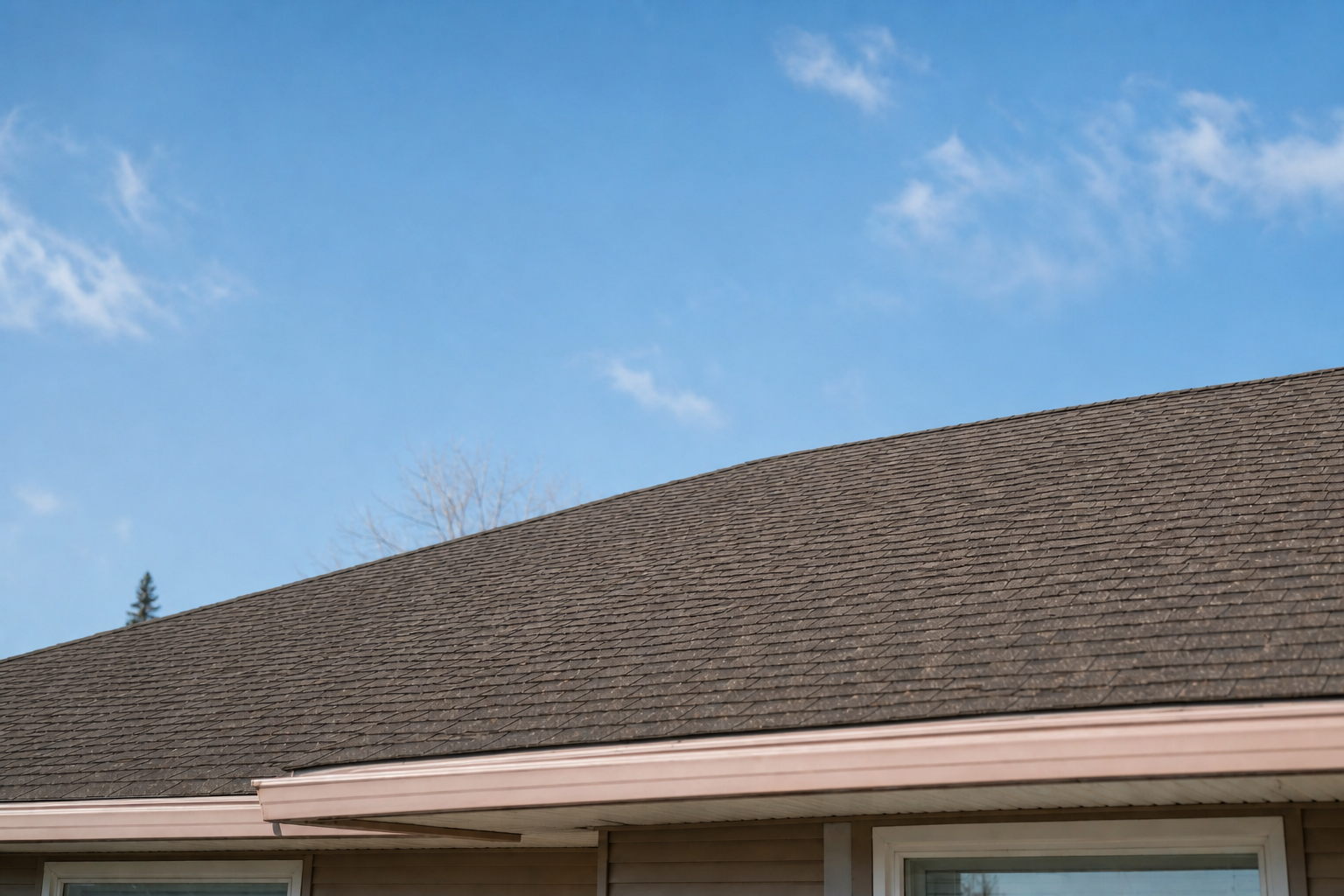
One: curling or clawing shingles
Curling is when the edges lift; clawing is when the middle lifts and the edges stay down. Both mean the shingle has dried out and shrunk, which in our heat happens sooner than the packaging suggests. Curled shingles no longer seal to each other, so the wind gets under them and they crack when touched.
Once a slope is curling generally, it cannot be repaired back to flat.
Two: missing granules and bare spots
Granules protect the asphalt from the sun. When they are gone, either in patches from foot traffic and downspout splash or everywhere from age, the shingle beneath cooks and fails fast. Look in the gutters: a layer of granules like coarse sand means the roof is shedding its surface.
Bare spots at a downspout outlet from an upper roof are local and fixable; bald slopes are not.
Three: cracked or broken shingles
Cracks across the tabs come from thermal cycling and brittleness. A few from a windstorm can be replaced; cracks scattered across the whole roof mean the material has reached the end. Push gently on a shingle edge on a warm afternoon; if it snaps instead of flexing, it is done.
Creased tabs from wind lifting count too, even if they look intact.
Four: damaged flashing and open valleys
Rusted valley metal, chimney flashing that has pulled away, and pipe boots split around the collar are repairable individually. When they are all failing at once on an old roof, it usually means the whole system is at the same age and a full replacement with new flashings is the sensible move.
Fixing four flashings on a roof with two years left is throwing money at it.
Five: leaks in more than one place
One leak has a cause. Several leaks across different slopes mean the underlayment has failed and the shingles are no longer keeping water out on their own. At that point repairs just move the leak to the next weak spot. Check the attic after a storm for multiple wet patches.
If you see two or more of these five signs on a roof past its middle age, book an inspection and start planning.
What a repair still covers
One curled slope on a young roof, a few bald patches at a downspout, a handful of cracked tabs after a windstorm, or a single failed flashing are repairs. It is the combination, and the age, that tips the verdict. When in doubt, a written inspection sorts it out cheaply.