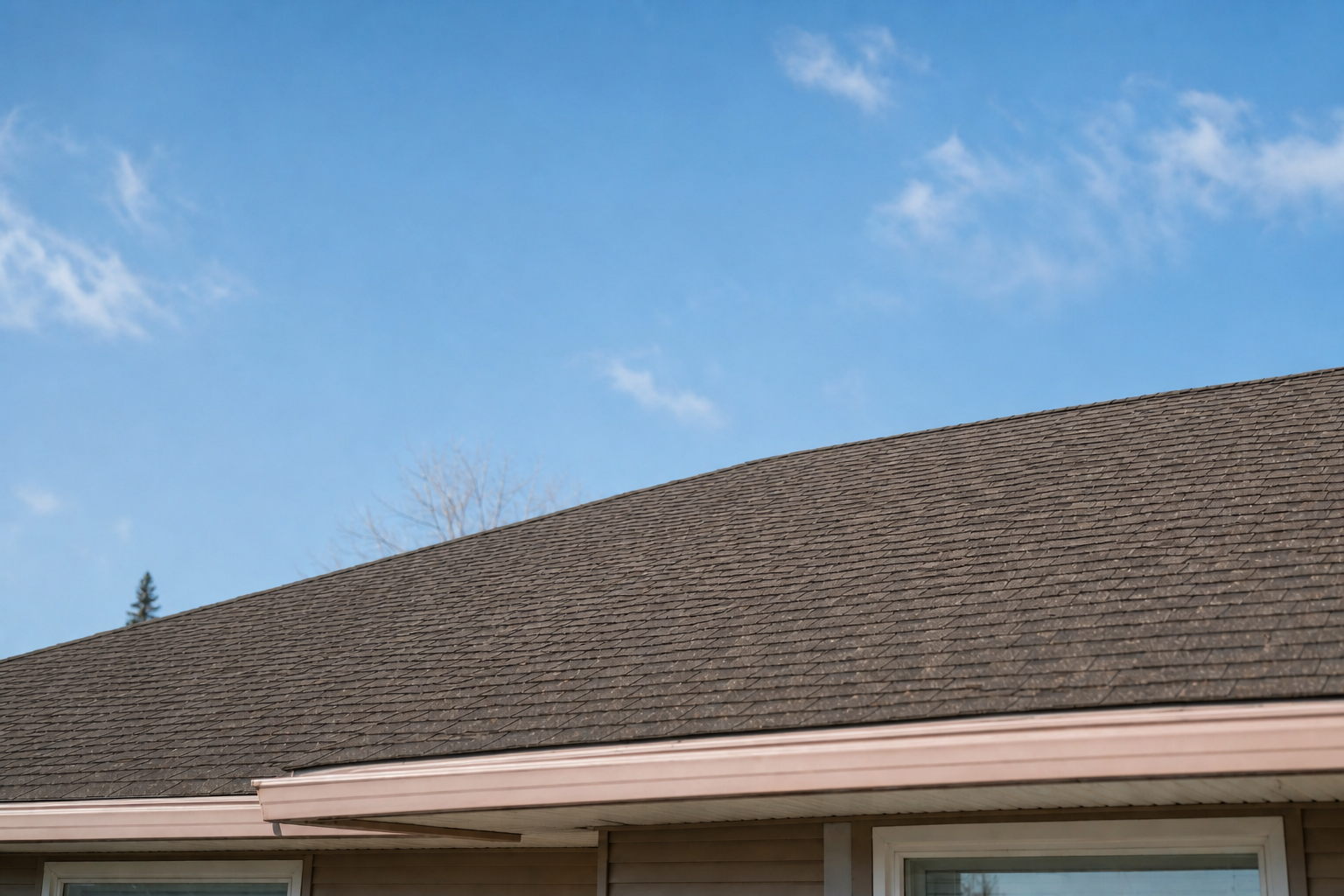
What gutters do
They collect water off the roof and carry it through the downspouts away from the house. Without them, every winter storm drops the whole roof's runoff at the base of the walls, where it soaks the soil, wets the slab or stem wall, and finds its way into crawl spaces and garages.
Persistent wet ground at the foundation is how you get mildew, mold and, on expansive soils, cracked slabs.
What clogged gutters do
A gutter full of leaves holds water instead of moving it. That water sits against the fascia board, rots it, and eventually pulls the gutter loose. It backs up under the first course of roofing and wets the eave decking. In freezing weather elsewhere it makes ice dams; here it simply overflows onto the stucco and the foundation.
Sagging gutters and stained fascia are the tell; by then the damage is done.
What guards do
A guard is a screen, mesh or solid cover over the gutter that lets water in and keeps most debris out. Good ones cut cleaning from twice a year to an occasional check. They work best where the debris is large leaves; fine pine needles and seed pods can still get through cheaper screens or mat on top of solid covers.
No guard makes a gutter maintenance-free, whatever the packaging says.
Choosing
Match the guard to the trees. Big broadleaf trees: almost any screen works. Pines and eucalyptus: fine micro-mesh is the only kind that keeps needles out. Solid reverse-curve covers shed leaves well but can overshoot in the heavy downpours we get in winter. Installation must not lift the roofing or void a shingle warranty.
I have seen guards nailed through the first course of shingle; that is a leak waiting to happen.
Worth it or not
If your gutters clog every season and you or someone you pay has to clear them, guards pay for themselves in a few years and remove a ladder job. If the roof has no trees over it, they are probably not needed. Either way, downspouts still need checking and the gutters still need a look each fall.
That look is part of my yearly plan, guards or no guards.