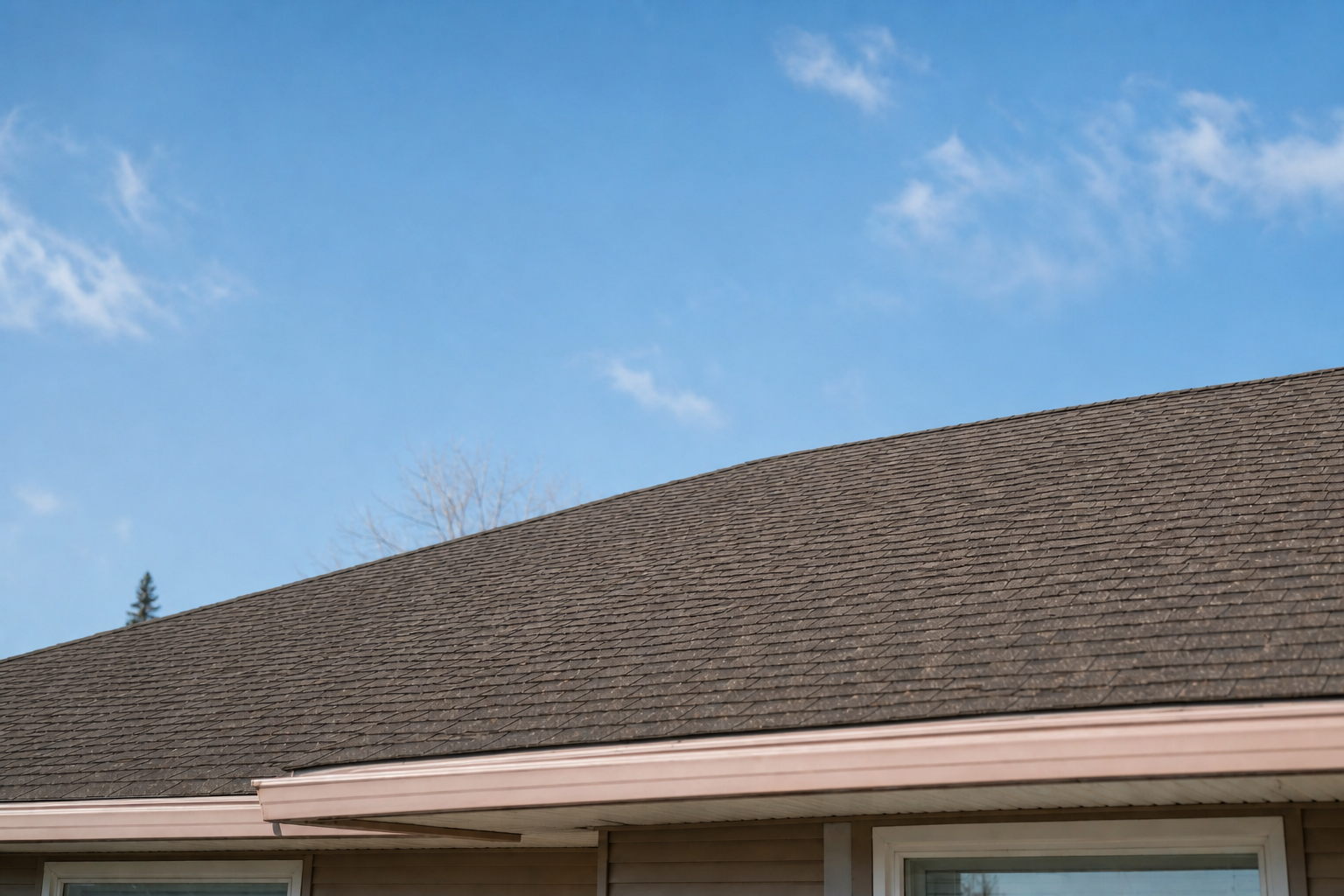
What a shingle is made of
A mat, either fiberglass or the older organic felt, saturated and coated with asphalt, then surfaced with mineral granules that protect the asphalt from sunlight and give the color. Fiberglass mats are lighter, more fire resistant and now standard. Organic mats held more asphalt and were tougher but burned more readily and are rarely made now.
The granules are the wear surface; when they go, the asphalt underneath starts to cook.
Styles
Three-tab is the flat, uniform pattern you see on older houses. Architectural or dimensional shingles are laminated in two layers with a staggered look and more thickness, and they carry a better wind rating. Luxury shingles go thicker again and imitate shake or slate.
For any re-roof here I recommend at least architectural grade; three-tab does not cope well with the wind.
Lifespan in inland heat
Rated life on the packaging assumes a temperate climate. On a south or west slope in San Bernardino with a poorly ventilated attic, expect noticeably less. Heat drives the oils out of the asphalt, the shingle goes brittle, and the granules let go. Good attic ventilation and a lighter color both help.
A cool-roof rated shingle, required in some cases by the state energy code, uses reflective granules to reduce that heat load.
Maintenance
Keep debris off, keep gutters clear, and have someone check the flashings and any exposed nails every fall. Do not pressure wash. Replace lifted or creased tabs promptly after a windstorm because a lost seal does not come back on its own.
Moss and algae are rare here; sun damage is the enemy, not damp.
When it is done
Curling edges, bald patches where the mat shows through, granules piling up in the gutter, cracks across the tabs, and leaks appearing in more than one place. Any one of those on a roof past its middle age means it is time to plan a replacement rather than keep patching.
There is a post on the five warning signs that goes through each.
Choosing the color
Lighter blends run cooler and last longer in this sun; dark blends look sharp and cook. If your neighborhood allows it, pick the lighter end of the range or a cool-roof rated product in the color you want. Bring samples up to the roof and look at them in afternoon light, not in the showroom.