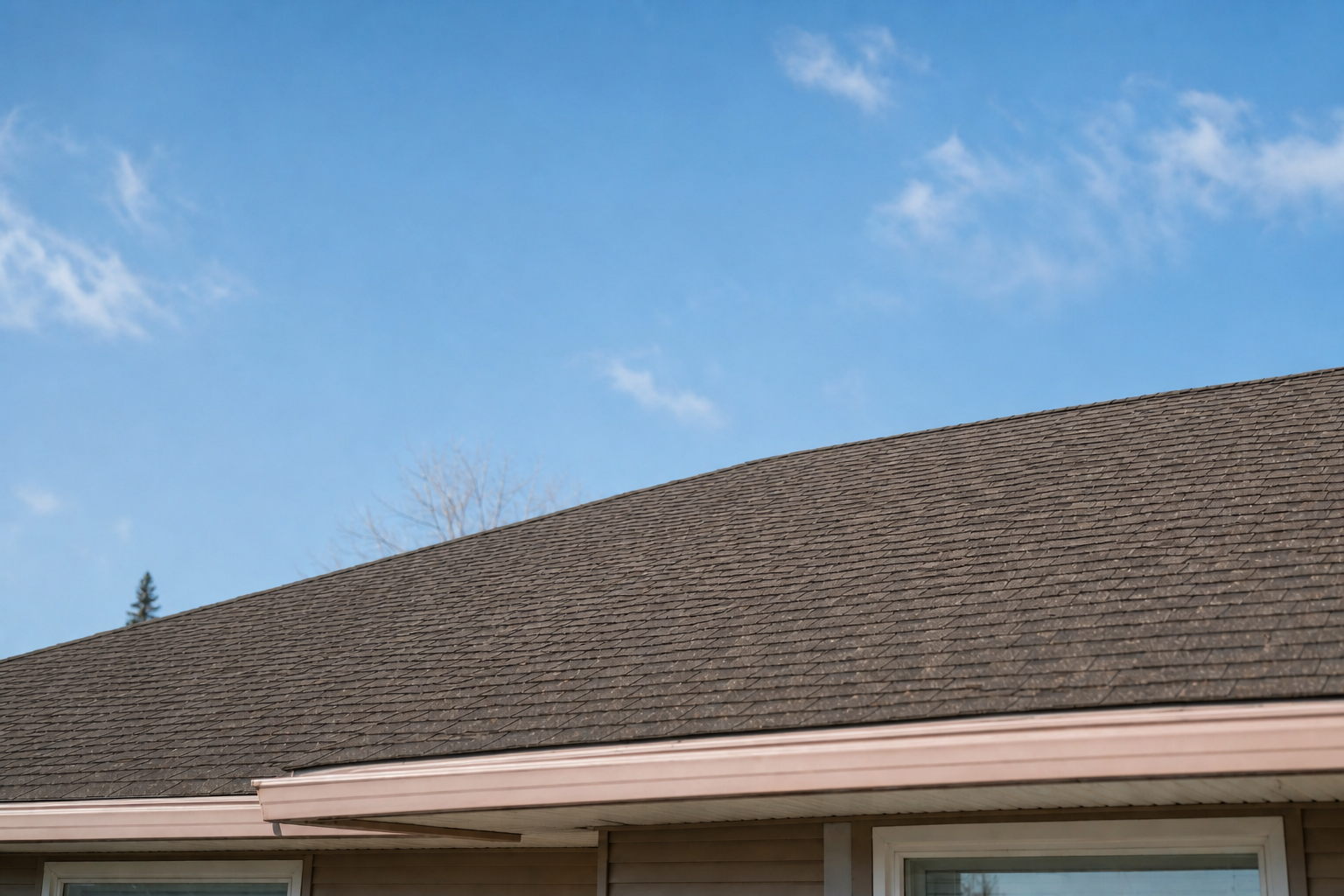
Asphalt shingle
The most common roof in America and in the older parts of San Bernardino. Cheap, quick to install, available in many colors, and rated for a couple of decades in mild climates. In our heat it ages faster. Fiberglass-mat shingles are the standard now; the older organic-mat kind is largely gone.
Pick a high-wind rated architectural shingle over three-tab if the budget allows; the extra thickness matters in Santa Ana season.
Luxury asphalt shingle
A much thicker laminated shingle that mimics the shadow lines of shake or slate. Heavier, longer warranty, better wind resistance, and a look that suits larger houses. It costs more than standard shingle but well below real slate or tile.
There is a separate post on this one with more detail.
Wood shingle and shake
Shingles are sawn smooth; shakes are split and rougher. Both are usually cedar and both look wonderful new. In the inland valley their problem is fire: many areas now require a Class A assembly, and untreated wood does not qualify. Existing shake roofs here are mostly being replaced with something else.
If you love the look, luxury asphalt or a shake-profile metal gives it without the fire issue.
Clay tile
The classic Mediterranean look, long-lived, non-combustible, and heavy. Clay handles our heat beautifully and the tiles themselves can outlast the house; the underlayment beneath them does not, which is why tile re-lays are common. Clay is brittle underfoot and cracks if walked on carelessly.
Check that the framing was built for the weight before switching to clay from a lighter material.
Concrete tile
The standard roof on tracts built here from the late 1970s onward. Cheaper than clay, similar lifespan, available in flat and barrel profiles and many colors. Also heavy, also on underlayment that ages out first. Concrete absorbs a little water and can grow moss on shaded north slopes, which is rare in our dry air.
For most re-roofs of existing tile houses, resetting the concrete tiles over new underlayment is the right answer.
Choosing for this valley
Weigh heat, wind and fire above looks. A high-wind architectural shingle in a cool-roof color or a concrete tile re-lay covers most houses here well. Save clay for houses framed for it, save wood for nowhere in the fire zones, and save luxury shingle for the larger older homes where the look earns the money.