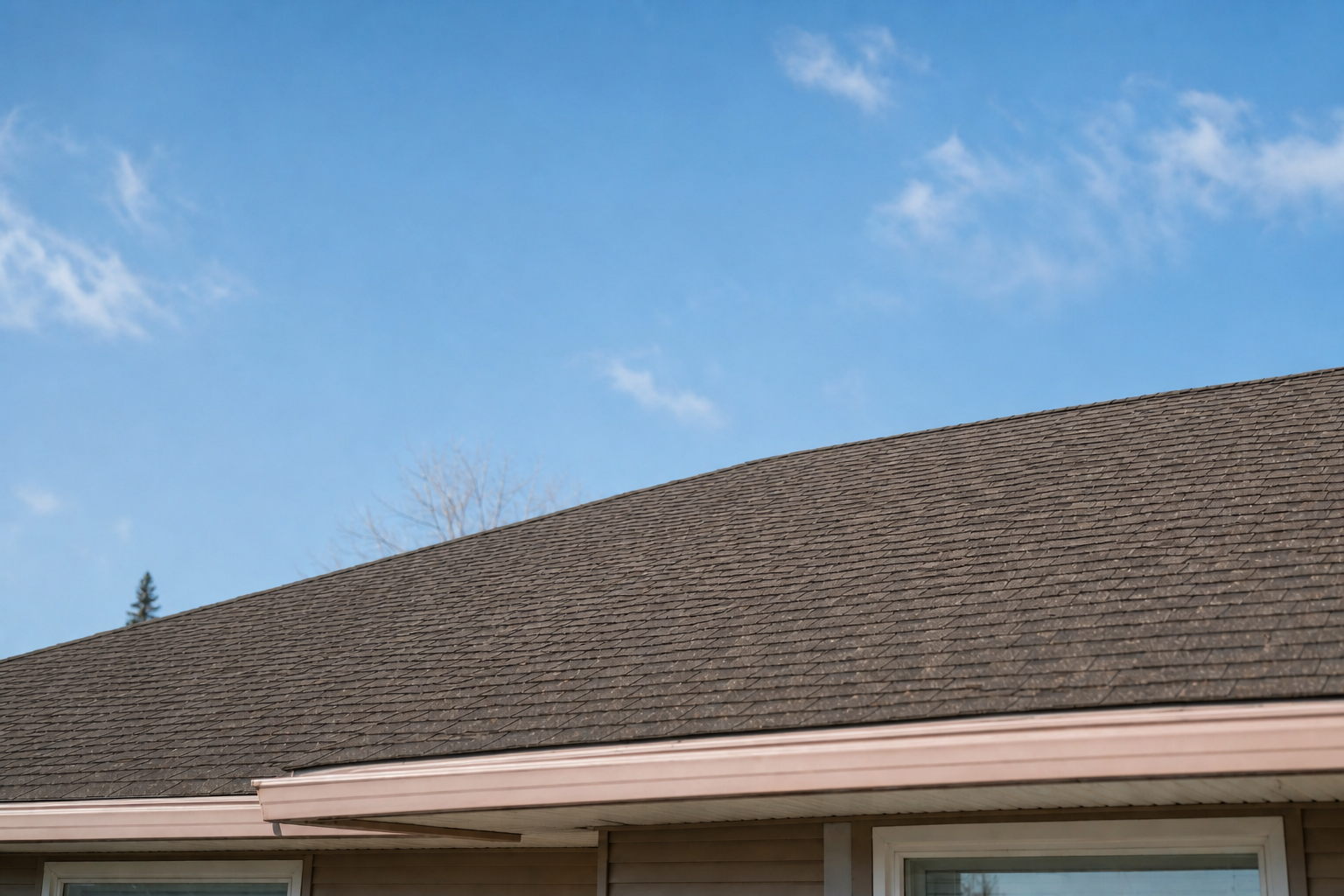
The roof gets checked before the panels go up
We get a lot of solar calls from homeowners in San Bernardino, Fontana and Rialto who have already signed with an installer and want us to look at the roof first. That order is right. Panels last twenty five years or more, and nobody wants young modules pulled off because the underlayment beneath them was already failing when they went up.
Our check before solar is the same four phase walk we use for anything else, but with extra time on the spots the racking will touch. A roof that looks fine from the ground can have soft decking right under a planned mounting foot, only visible once we are in the attic looking up at that same spot.
How the racking actually penetrates the roof
Every solar mount comes down to a lag bolt into a rafter with a flashing over the hole, and the flashing does the waterproofing, not the bolt. The failures we get called out for are almost always a flashing shortcut or a mount landing between rafters with nothing solid underneath it, invisible from the ground and slow to leak, usually a season after the solar crew has moved on.
Tile, shingle and metal each need a different approach
Composition shingle is the easiest roof to flash for solar and most installers handle it fine on their own. Concrete and clay tile is what we get called back to most, because the mount has to go through the tile into the deck, and the tile around it has to be cut, notched or swapped for a solar mounting tile that seats properly. Done wrong, water tracks sideways under the field tiles instead of running off the surface.
Standing seam metal usually clamps onto the seams instead of penetrating the panels at all, one reason we point homeowners toward metal when solar is coming and the roof is already due.
When the roof under existing panels needs work
Plenty of the roofs we work on already have solar installed, and fixing or replacing under an array means coordinating a removal and reinstall with whoever owns the panels, the original installer or a servicing company if that installer is gone. We map out which panels move, get the remount scheduled first, and photograph the layout so it goes back the way it came off.
What we tell homeowners going solar
Get the roof looked at before you sign for panels, not after, especially once the roof is past the middle of its life. Ask your solar company what flashing method they use on tile if that is what you have, and ask what a later penetration does to the roof warranty, since most warranties exclude damage from added holes unless the same roofer does the solar flashing.